


In the fast-paced world of business strategy, decision-making is rarely black and white. Organizations often rely on complex models that weigh multiple criteria — cost, risk, performance, scalability, sustainability, and more.
But here’s the catch: most teams stop after getting the final ranking. They look at which option scores highest and move forward.
What they often miss is the real goldmine — understanding how sensitive those rankings are to changes in priorities or assumptions. This is where sensitivity analysis makes all the difference.
By incorporating Sensitivity Δ (Delta) Objectives and performance sensitivity into your workflow — especially through advanced platforms like Comparion— you don’t just get answers; you gain the insight and confidence to defend them.
What Is Sensitivity Analysis in Decision-Making?
Sensitivity analysis is the process of testing how changes in the weights or priorities of decision criteria affect the final outcome. It helps leaders identify:
-
Which factors have the most influence on the result
-
How stable the preferred option is
-
Where the decision might be fragile or overdependent on one criterion
In simpler terms, it’s about stress-testing your decision model — revealing whether your “best choice” truly holds up under different scenarios or assumptions.
When combined with Comparion’s interactive visualization tools, sensitivity analysis becomes a powerful, transparent way to communicate decisions across teams and leadership.
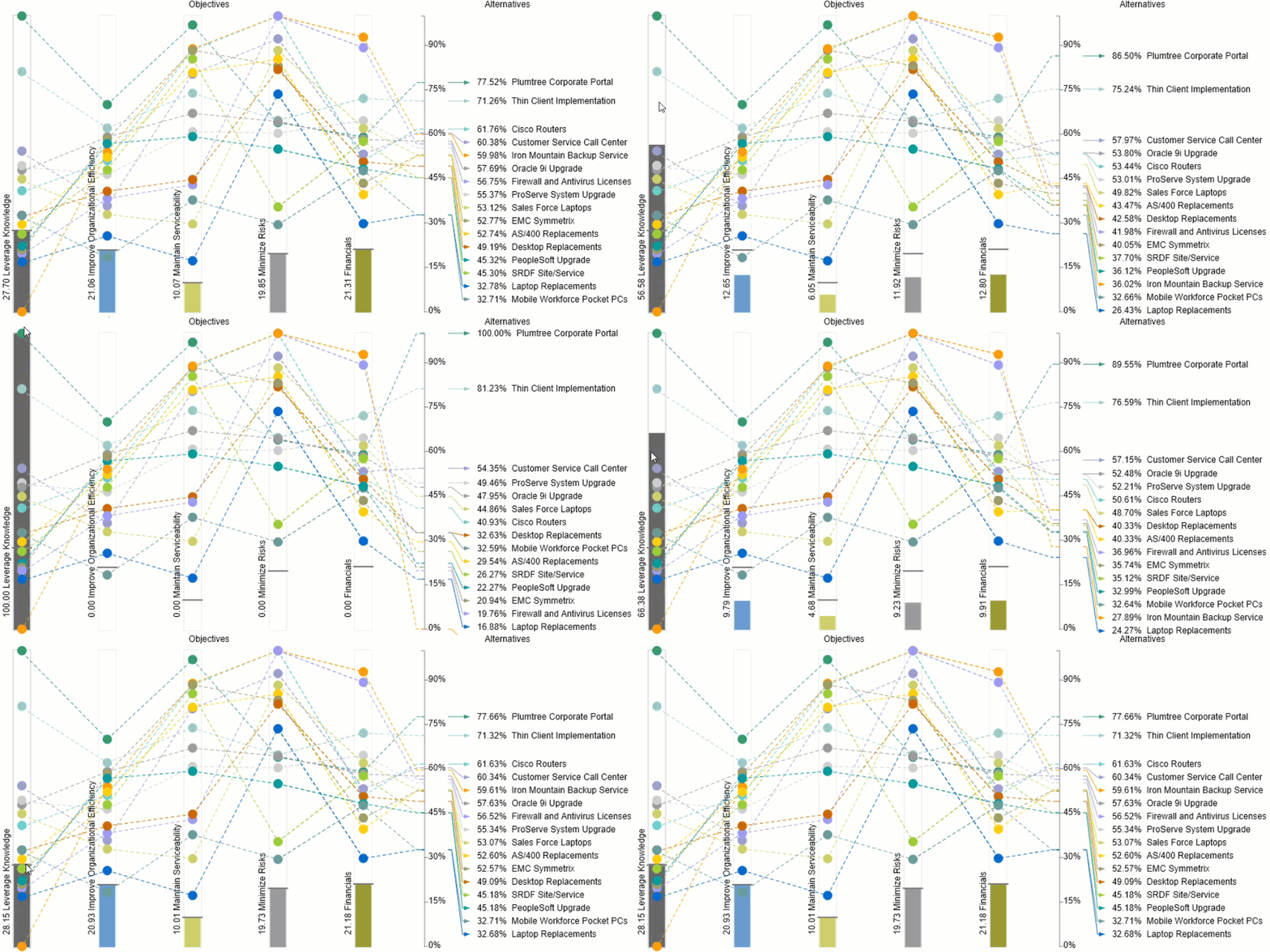
1. It Reveals What Drives the Outcome
Not every criterion affects the decision equally. Some objectives dominate the result, while others have minimal impact.
Using Comparion’s Performance Sensitivity feature users can visually adjust objective weights and instantly see how alternative rankings change.
This real-time feedback exposes which objectives are truly driving the decision — and helps teams answer critical questions such as:
-
“Which criteria have the biggest influence on our final ranking?”
-
“If we adjust our priorities slightly, does the top option remain the same?”
This clarity not only makes decision-making more data-driven but also strengthens the rationale behind every recommendation.
2. It Builds Stakeholder Confidence and Consensus
One of the biggest challenges in collaborative decision-making is getting everyone aligned. Stakeholders often ask:
“What if we cared a bit more about cost and a bit less about innovation?”
Sensitivity analysis allows you to show, not just tell, how those adjustments would impact the outcome.
With Comparion, you can visualize changes instantly — helping everyone see that the model isn’t rigid, but adaptable. That transparency reduces friction, improves trust, and ensures every participant feels heard.
In other words, sensitivity analysis replaces debate with data.
3. It Makes Trade-Offs Transparent and Defensible
All great decisions require trade-offs. Sensitivity analysis quantifies those trade-offs so you can clearly explain what was prioritized and why.
For example, if “time-to-market” outweighs “cost savings,” the analysis will show how that weighting shaped the ranking. By sharing this reasoning, you make your decisions more defensible and audit-ready.
In Comparion, you can dynamically adjust priorities to show how various trade-offs affect outcomes — turning subjective discussions into objective insights.
This transparency is especially valuable for executive reviews, compliance audits, or board approvals.
READ: Using Decision-Making Software to Accelerate Strategic Planning
4. It Uncovers Hidden Risks or Hidden Robustness
Sometimes a decision that looks rock-solid is actually fragile — a small shift in one criterion can flip the entire ranking. Other times, it’s the opposite: your choice remains the best under a wide range of assumptions.
Sensitivity analysis reveals both cases.
With Comparion’s Sensitivity Δ (Delta) Objectives, you can test how much an objective’s weight needs to change before the preferred alternative loses its lead. This process:
-
Highlights fragile decisions that may need further validation
-
Confirms robust decisions that hold strong across different scenarios
-
Reduces the risk of surprises when external conditions or stakeholder priorities change
That insight empowers leaders to move forward with confidence — knowing exactly how stable their decision really is.
5. It Enables Scenario-Based Thinking and Future-Proofing
Markets evolve. Priorities shift. Stakeholders come and go.
Rebuilding your entire model for every change wastes time. Instead, sensitivity analysis allows you to test new assumptions within minutes.
Comparion’s interactive interface enables scenario modeling across different weight sets or stakeholder groups — so you can quickly explore questions like:
-
“If compliance becomes 30% more important, do our priorities shift?”
-
“If we reduce cost weight by 10%, which vendor or project becomes the top choice?”
This agility helps your organization stay adaptive and future-ready, without losing sight of strategic goals.
6. It Focuses Attention Where It Matters Most
Decision fatigue is real. In complex models, teams often spend hours debating minor criteria that barely impact results.
Sensitivity analysis solves that by pinpointing where the biggest impact lies.
With Comparion, you can easily identify which objectives truly move the needle — allowing meetings to stay focused, discussions to stay productive, and decision cycles to move faster.
This not only saves time but ensures energy is directed toward the objectives that actually shape outcomes.
7. It Strengthens Decision Quality and Implementation Confidence
Ultimately, the goal of sensitivity analysis is not to change your answer — it’s to strengthen it.
When you’ve tested multiple scenarios and confirmed that your preferred alternative holds steady, your organization can move forward with:
-
Data-backed confidence: You understand the “why” behind your decision.
-
Transparency: Stakeholders see how every criterion influences the outcome.
-
Resilience: Your choice stands strong under change and uncertainty.
That’s the difference between simply making a decision — and making a decision you can trust.
Bottom Line
Sensitivity analysis isn’t a luxury; it’s a necessity for modern, data-driven decision-making. It transforms decision models from static outputs into living systems of insight.
By integrating Comparion’s Sensitivity Δ (Delta) Objectives and Performance Sensitivity tools into your process, you ensure every decision is transparent, defensible, and future-proof.
Take the Next Step with Comparion
If you want to make smarter, faster, and more confident decisions — explore Comparion’s Performance Sensitivity tools.
Comparion empowers teams to visualize trade-offs, align stakeholders, and validate decisions with real-time sensitivity analysis. It’s not just about choosing the best option — it’s about understanding why it’s the best.
👉 Start exploring Comparion today and experience data-driven decision-making at its best.